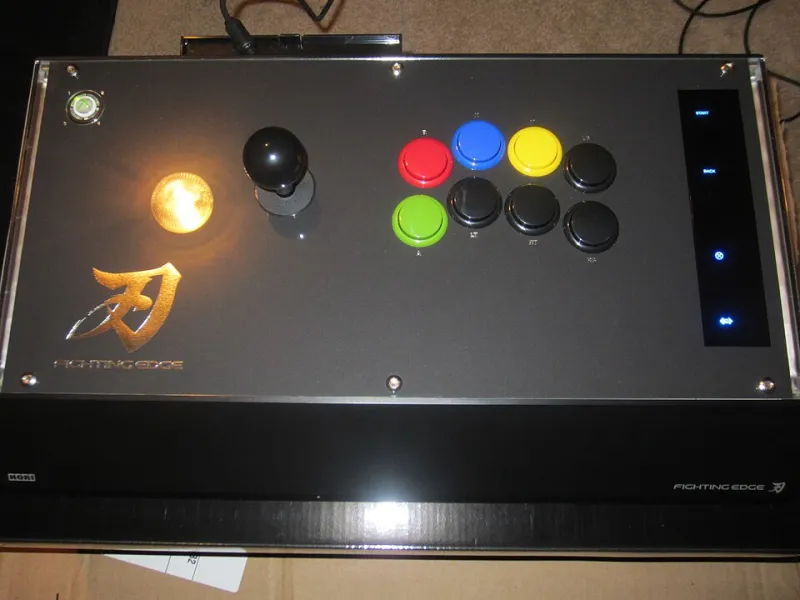
Knockdown Is Not a Coin Flip: Build a Wake-Up Playbook That Ends the Panic
Photo: Dfeldmann, CC BY-SA 4.0, via Wikimedia Commons
You know the feeling. The screen shakes, your character hits the floor, and your hands start doing something — anything — before your brain catches up. Sometimes it's a wake-up attack. Sometimes it's holding block. Sometimes it's a roll that carries you directly into a full combo. Whatever it is, it wasn't a decision. It was a reflex, and reflexes are exactly what your opponent is counting on.
Wake-up is not a coin flip. It's a small, solvable problem, and the players who look untouchable on knockdown are usually just the ones who solved it first. This is how to build that solution: a decision tree you can run in the two seconds between hitting the floor and getting hit again.
Step One: Inventory Your Getup Options
You can't pick the right escape if you don't know what's on the menu. Before you practice a single setup, spend ten minutes in training mode and write down what your character actually has on wake-up:
- A wake-up attack with invincibility or armor, and how much meter it costs.
- A delayed getup, if your game has one.
- A backdash or roll with real invincibility frames.
- Plain block, which is not passive — it's a choice.
- A reversal special that beats specific meaty timings.
Be honest about the startup. A wake-up attack that loses to a well-timed meaty is not a getup option; it's a gamble. Same goes for a roll that gets clipped by a low. Write down what beats what, because the decision tree only works if the branches are real.
The Tree, In Order
Run this top to bottom every time you're on the floor. It takes less time to read than it does to get comboed.
- What has my opponent done on my last two knockdowns? If they meatied both times, expect meaty until they prove otherwise. If they walked up and threw, they're a throw-loop player until they show you something else.
- Does my safest option beat their most likely option? Block beats meaty pressure. Delayed getup beats a meaty. A wake-up attack beats a throw. Match the tool to the habit, not to your mood.
- What does the round actually need? If you're up a full combo's worth of health with 20 seconds left, the greedy wake-up attack is not the play. If you're one touch from losing, the safe option might not be safe enough.
- What's my meter for? An armored wake-up that eats your only bar is a different decision than one that leaves you with breaker money.
Notice what's not on that list: what you feel like doing. Feelings are for combo routes, not for getting off the floor.
Reading the Setup While It's Happening
The trick to wake-up defense is that you usually get one clean look at the setup before it hits you. Watch the opponent's approach, not your own character. Are they walking forward slowly? That's a meaty or a throw. Are they backing up? That's a shimmy or a whiff-punish bait. Did they dash in and stop? Delayed pressure.
Drill it: set the training dummy to knock you down, then record three different follow-ups — immediate meaty, delayed button, walk-up throw. Randomize them. Your job isn't to win the exchange; it's to correctly name the setup out loud before it lands. Do twenty reps a day for a week and the read becomes automatic.
Second drill: play a set where you're not allowed to wake-up attack. Block, delay, roll, whatever — just not the attack. You'll learn fast which opponents were free to mash against and which ones were actually setting you up.
When the Round Changes the Answer
The same setup deserves a different response at 90% health than at 9%. With a life lead, your default should be the lowest-variance option: block, take the throw, reset to neutral. Giving up 12% to keep your lead is a bargain. With your back against the wall and the timer running out, the math flips — you may need the risky wake-up just to escape the corner.
That's the whole point of the tree. It doesn't tell you to be passive or aggressive. It tells you to be deliberate.
The Habit That Replaces Panic
Here's the unglamorous truth: most wake-up losses aren't reads, they're autopilot. You mash because mashing feels like doing something. The fix isn't a better guess — it's a rehearsed decision. Pick one branch of the tree, practice it until it's boring, and let the boring option save you the round.
Get off the floor with a plan. The coin flip was never real.