Every Frame Tells a Story: How NetherRealm Designs the Fighters You Love to Hate
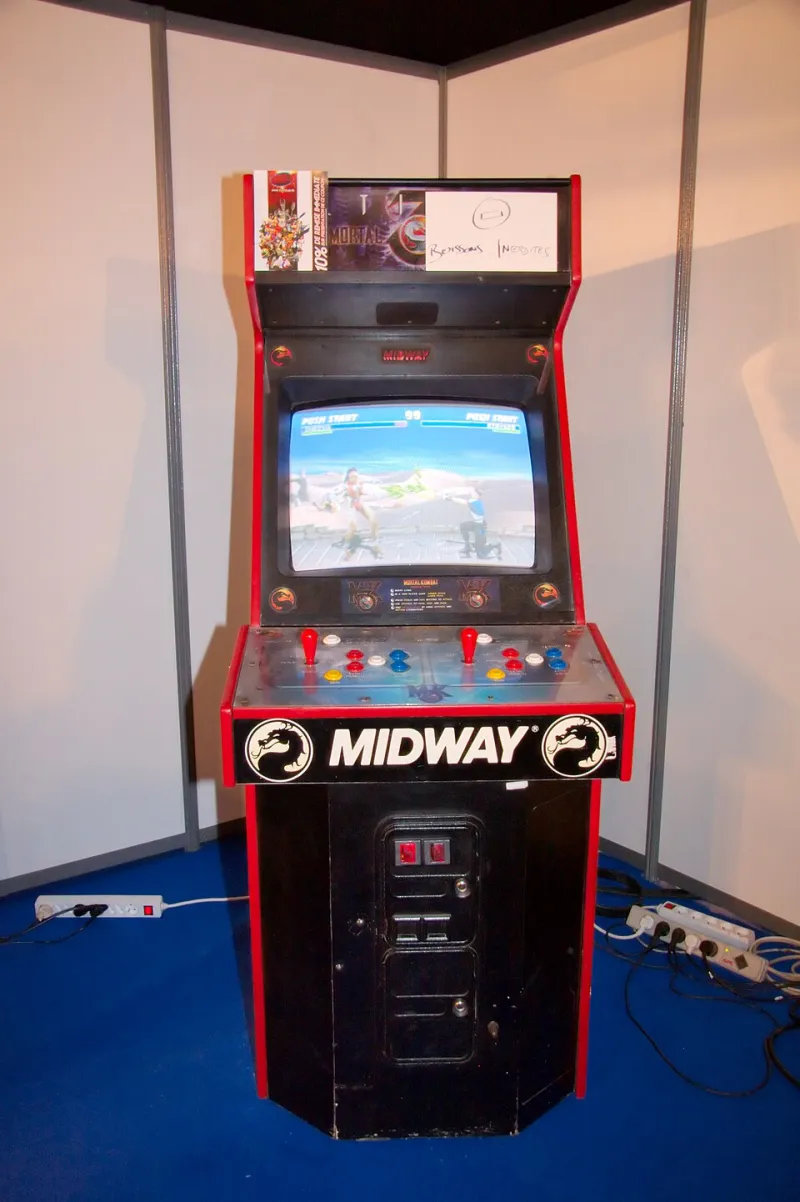
Photo: Georges Seguin (Okki), CC BY-SA 3.0, via Wikimedia Commons
You can spot a Scorpion player from across the venue. Not because of the yellow shirt (though there's always a yellow shirt), but because of how the match feels within the first ten seconds. That's not luck. That's design.
NetherRealm Studios has been quietly perfecting character design for three decades, and most players never stop to appreciate just how deliberate it all is. Understanding that design isn't just fan service — it's one of the fastest ways to level up your gameplay.
The Spear Is a Promise
Every iconic Mortal Kombat move functions as a statement of intent. Scorpion's spear says: "I want you close, and I will drag you to me if I have to." Sub-Zero's ice clone says: "Come at me and pay for it." Raiden's lightning says: "I'm faster than you think."
These aren't just cool animations — they're the core of each character's gameplay philosophy translated into a single visual. When you learn a new character, the first question shouldn't be "what's their best combo?" It should be "what does this character want the match to look like?"
Scorpion wants pressure and mix-ups. Sub-Zero wants control and zone enforcement. Raiden wants explosive momentum swings. The moves are the philosophy. The philosophy is the roadmap.
Animations Lie (On Purpose)
Here's something intermediate players learn the hard way: animation tells you what's coming, but great character design makes some animations deliberately deceptive.
Watch how many MK moves share similar startup animations. A crouching jab and a low sweep start from the same crouch. A mid-hitting string and an overhead start from the same stance. This is called "animation sharing," and it's the backbone of every legitimate mix-up in the game.
When you're getting opened up by a character you don't know, you're not losing to luck — you're losing to visual language you haven't learned to read yet. The fix isn't rage. It's lab time. Set the CPU to random block or attack, and just watch. Ten minutes of pure observation against an unfamiliar character teaches you more than an hour of getting bodied.
Your Ears Are a Second Health Bar
Mortal Kombat's audio design might be the most underrated competitive tool in the series. Every special move has a distinct audio cue, and the good ones hit before the visuals even register.
That icy crackle before a Sub-Zero slide? That's your cue to jump. The electric hum of a Raiden teleport? Your cue to stop pressing buttons. High-level play is full of moments where players react to sound faster than they could ever react to sight, because audio cues arrive a few frames earlier and cut through visual clutter.
Play with good headphones. Seriously. It sounds like a joke, but the difference between TV speakers and a proper headset in a fighting game is real, and MK's sound team has earned that attention.
Silhouettes and Color Theory
Zoom out for a second. Scorpion is yellow. Sub-Zero is blue. That sounds trivial until you realize it's a masterclass in instant readability — you never have to think about who's on screen, even in the chaos of a match.
The same logic applies to silhouettes. Big characters like Ferra or Goro read as grapplers before they throw a single punch. Slim, fast characters read as rushdown. NetherRealm leans into archetype shorthand so hard that you can often guess a character's game plan from the character select screen alone.
Use that. When you're in the lab prepping for a local, study the archetype before the individual moves. Grapplers get blown up by keeping distance and teching command grabs. Zoners get destroyed by patient, grounded approaches that refuse to jump. The character is the flavor; the archetype is the meal.
Why This Matters for Your Ranked Climb
Most players study matchups by memorizing punish windows and frame traps. That's fine, but it's shallow knowledge that evaporates under tournament pressure.
Deep knowledge — the kind the best players in your region have — comes from understanding intent. When you know what a character wants to do, every option they pick makes sense in context, and options that make sense can be countered.
Next time you lose to a character that feels like nonsense, don't just lab the punish. Ask the designer's question instead: what is this character promising me, and how do I make them break that promise? That's the difference between knowing the moves and knowing the kombatant.