Nothing Left to Lose: How to Flip the Script When You're Down to Your Last Fighter
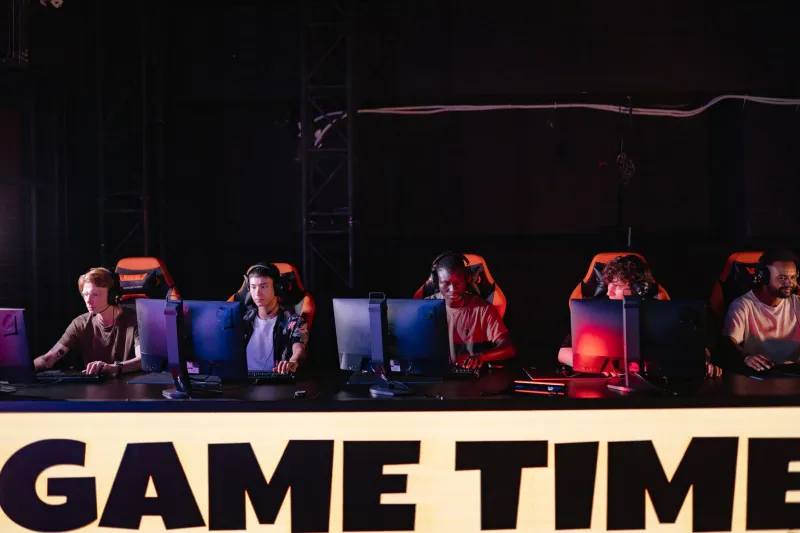
There's a specific kind of silence that falls over you the moment your second character hits the ground. The crowd noise fades. The controller feels heavier. Your opponent across the setup is already leaning back, relaxed, maybe even smiling. They think it's over.
Here's the thing — sometimes that's exactly where you want to be.
Elite Mortal Kombat players talk about this in hushed tones, almost like it's a dirty secret. There's a version of tournament play where having your back completely against the wall strips away every bad habit, every hesitation, every overcomplicated game plan you've been running all bracket. What's left is pure, distilled fighting game instinct. And if you know how to channel it, that's a terrifying thing to face.
This isn't about inspirational nonsense. This is about the actual psychological and tactical machinery that makes last-stand scenarios winnable — and how you can train yourself to access it on demand.
The Mental Shift That Changes Everything
Most players approach an elimination situation the same way they'd approach any other match: cautiously, methodically, trying not to make mistakes. That's the wrong frame entirely.
When you're down to your last character, the entire risk equation flips. You no longer have resources to conserve across future games. There is no future game. Every decision you've been deferring — that aggressive read you talked yourself out of, that variation in your pressure strings you were saving, that wakeup option you didn't want to telegraph — all of it is now free to deploy. The cost of being wrong is already priced in. You're eliminated if you lose, whether you played it safe or swung for the fences.
Once that clicks, something opens up. You stop playing not to lose and start playing to win. Those are genuinely different games.
Reset Your Risk Tolerance, Not Your Game Plan
Here's where a lot of players make a critical mistake: they interpret "nothing to lose" as "do random stuff." That's not the move. Desperation doesn't mean chaos — it means recalibrated aggression.
Your fundamentals still apply. Frame data still matters. Spacing still matters. What changes is your threshold for taking calculated risks that you'd normally pass on in a longer set. That 50/50 you've been avoiding because you didn't want to show your hand? Now's the time. That punish attempt on a move with a tight window? Commit to it.
Think of it like a poker player who's short-stacked. The strategy doesn't become "go all-in every hand." It becomes "identify the highest-EV spot and push it hard when it shows up." You're still reading the table. You're just no longer folding hands you'd have normally played.
What Your Opponent Is Actually Feeling Right Now
This is the part nobody talks about enough: your opponent is probably more uncomfortable than you are.
Leading 2-0 in a set, up to their last character, your opponent now has something to protect. They've built a lead. They have expectations — from themselves, from anyone watching. The psychological weight of closing out a set is real, and plenty of talented players have choked it away because they shifted into preservation mode at exactly the wrong moment.
Your job in this scenario is to make them feel that pressure as early as possible. Come out with energy. Make them respond to you instead of executing their own game plan. A fast, confident opening round — even if you lose it — sends a message that you're not rattled. That plants a seed of doubt. And doubt, in a fighting game, is a resource you can spend.
Tactical Adjustments for the Last-Character Situation
Beyond the mental game, there are concrete in-match adjustments worth making:
Mix up your entry points. If you've been approaching from mid-range all set, vary it. Come in high, come in low, use a different advancing normal. Your opponent has been building a mental model of your tendencies for two games. Disrupt it immediately.
Front-load your meter spending. In a normal set, you might bank meter across rounds for a guaranteed punish situation later. When you're on your last character, invest it earlier. Crushing Blows, Fatal Blows, amplified specials — use them to create momentum swings instead of sitting on them as safety nets.
Target their comfort zone. Every player has a range where they feel in control. Your opponent has been operating from that range all set. Force them out of it. If they've been winning at mid-range, get close. If they've been bullying you in the corner, stay centered. Make them solve a different problem than the one they've been solving.
Accept the first round as a free information round. If you're already eliminated on a loss, spending the first round probing for patterns costs you nothing. Play it with genuine intent, but treat every interaction as data collection. By round two, you'll know more about their current mental state than you did going in.
Building the Last-Stand Mentality in Practice
You can't manufacture this mindset on the fly during a tournament if you've never practiced it. So build it into your training.
Set up deliberate "elimination" scenarios in casual play. Tell yourself before the session that you only have one character available — no switching, no excuses. Play with that constraint and pay attention to how your decision-making changes. Notice when you start taking risks you'd normally avoid. Notice whether those risks are paying off.
You can also do this in sets with training partners. Play out full bracket scenarios where one player is on their last character from the start. Rotate. Learn both sides of the dynamic — the pressure of closing it out and the freedom of having nothing left to lose.
The players who handle elimination rounds best aren't the ones who got lucky when it counted. They're the ones who've rehearsed the emotional and tactical landscape of that situation until it feels familiar instead of catastrophic.
The Scoreboard Is a Lie
A 2-0 deficit in a set is just information. It tells you what's happened — it says absolutely nothing about what's going to happen. The players who internalize that are the ones who come back from situations that look hopeless on paper.
Your last character isn't a white flag. It's a permission slip. Permission to stop holding back, stop second-guessing, and stop playing the version of yourself that's trying to look good while losing.
Play the version that doesn't care how it looks. Play the version that's just trying to win.
That version is a lot harder to beat.