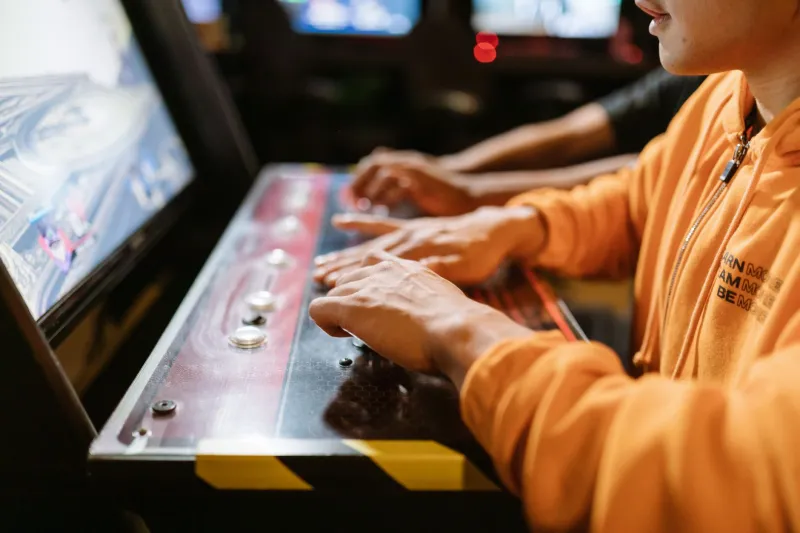
Lose on Purpose: How Getting Bodied in Practice Makes You Unstoppable in Tournament

There's a version of Mortal Kombat practice that feels great. You run your combos clean, your opponent whiffs constantly, you win round after round, and you log off feeling like a god. It's satisfying. It's also almost completely useless for actual growth.
The players who consistently go deep in tournaments — the ones who look impossibly calm when they're down a round and staring at a half-empty health bar — didn't get that way by winning every session. They got there by deliberately putting themselves in the worst possible situations, over and over, until surviving a deficit felt like second nature.
This is what we're calling comeback currency: the accumulated experience of playing under pressure that you can only earn by losing, and losing intentionally.
Why Winning Practice Sessions Is a Trap
Here's the problem with optimizing for wins in training: your brain adapts to the conditions you practice in. If you always play from a comfortable position — fresh health, stocked meter, early-round momentum — your decision-making only gets calibrated for that scenario. You get really good at winning when you're already winning.
But tournament play doesn't care about your comfort zone. Matches flip. A single bad read, one dropped combo, one unexpected armored reversal can flip the entire momentum of a set in ten seconds flat. And when that happens to players who've never practiced from behind, they freeze. They deviate from their gameplan. They start pressing buttons they have no business pressing.
The deficit is where your real fundamentals live — and most players never stress-test them until it's too late.
What Deficit Training Actually Looks Like
This isn't complicated, but it does require intentionality. The idea is simple: start practice scenarios from the worst possible position and work backward to a win.
Some concrete ways to set this up:
- Spot your opponent a full round before you start taking the set seriously. You're not allowed to "save" yourself with panic play — you have to work back methodically.
- Start rounds with 30–40% health against an opponent at full. This is particularly brutal and extremely useful. Every decision has weight when your margin for error is that slim.
- Burn your meter at the start of a round — no defensive options, no offensive extensions — and see what your neutral game actually looks like when you're resource-starved.
- Play the character matchup you hate most on purpose, and do it from behind. If you main Scorpion and you despise playing against zoners, set up the worst version of that scenario and practice getting out of it.
None of this is fun in the traditional sense. But the data you collect about your own play is genuinely irreplaceable.
The Psychological Edge You're Actually Building
Here's something the top players understand that casual players often miss: the mental game and the mechanical game are inseparable. When you're down a round and your opponent smells blood, the pressure isn't just about execution — it's about whether your brain stays in problem-solving mode or switches into panic mode.
Deficit training conditions your nervous system. The first few times you practice from a bad spot, it feels awful. Your instincts push you toward desperate, high-risk plays. You try to erase the deficit in one combo instead of playing the patient game that actually gets you back in it.
But after enough reps, something shifts. The pressure starts to feel familiar. You recognize the sensation of being down and your brain stops treating it like an emergency. That calm is not a personality trait — it's a skill you built by sitting in discomfort long enough to get comfortable there.
This is exactly why you'll see elite players at events like EVO or CEO walk away from a first-round loss looking almost unbothered. They've been in that spot so many times in practice that it doesn't register as a crisis. It just registers as a situation they've solved before.
Hidden Tools Only Pressure Reveals
One of the most underrated benefits of deficit training is what it shows you about your own character toolkit. When you're playing from a comfortable position, you naturally gravitate toward your highest-damage, most reliable options. You run the gameplan that works and you don't deviate.
But when you're down health and your opponent is playing more conservatively, suddenly you start experimenting. You dig into your character's kit for options you'd never normally reach for. A tool you dismissed as situational becomes exactly what you need. A mixup you never practiced becomes your most dangerous weapon.
That's not luck — that's your brain being forced to problem-solve outside its usual patterns. Deficit play essentially fast-tracks your understanding of your character's full moveset because it eliminates the option to just run your default gameplan.
Plenty of players have discovered their best pressure strings, their most effective wake-up options, or their most reliable comeback mechanics not from lab sessions but from desperate moments in matches where they had to figure it out on the fly. Deficit training puts you in those moments deliberately, so you're not discovering these tools for the first time when a tournament set is on the line.
Making It a Habit, Not a Punishment
The key to integrating this into your regular practice is reframing what success looks like. If you go into a deficit scenario and lose, that's not a failed session — that's information. You found the ceiling of your current skill level under pressure. Now you know exactly what to work on.
Try building a simple rule into your practice routine: one out of every three sessions should start from a disadvantage. Not every session — burnout is real, and you still need to maintain your clean execution work. But regular enough that deficit play becomes a normal part of your preparation rather than something you only encounter in actual competition.
Track what breaks down. Is it your defense? Your meter management? Your neutral reads? The patterns that fall apart under pressure are your roadmap for improvement.
The Bottom Line
The players who win when it matters most aren't the ones who practiced winning — they're the ones who practiced surviving. Deficit training is uncomfortable, humbling, and occasionally infuriating, but it builds something you genuinely cannot get any other way: the confidence that comes from knowing you've already been in the worst version of this situation and found your way out.
Stop protecting your win rate in practice. Start spending some of that time losing on purpose. The comeback currency you build will pay out when it counts most.